“Why do we train our children in the liberal arts? It is not because these studies can grant someone virtue, but because they prepare the soul for accepting it.” —Seneca
The Temple Near Mieza
Plutarch tells us that when Alexander the Great was still young, his father Philip sent for “the most famous and learned of the philosophers of his time“ to teach and form him. Alexander was full of promise and ability and his father was already justifiably proud of him: “‘My boy, you must find a kingdom big enough for your ambitions. Macedonia is too small for you.’“
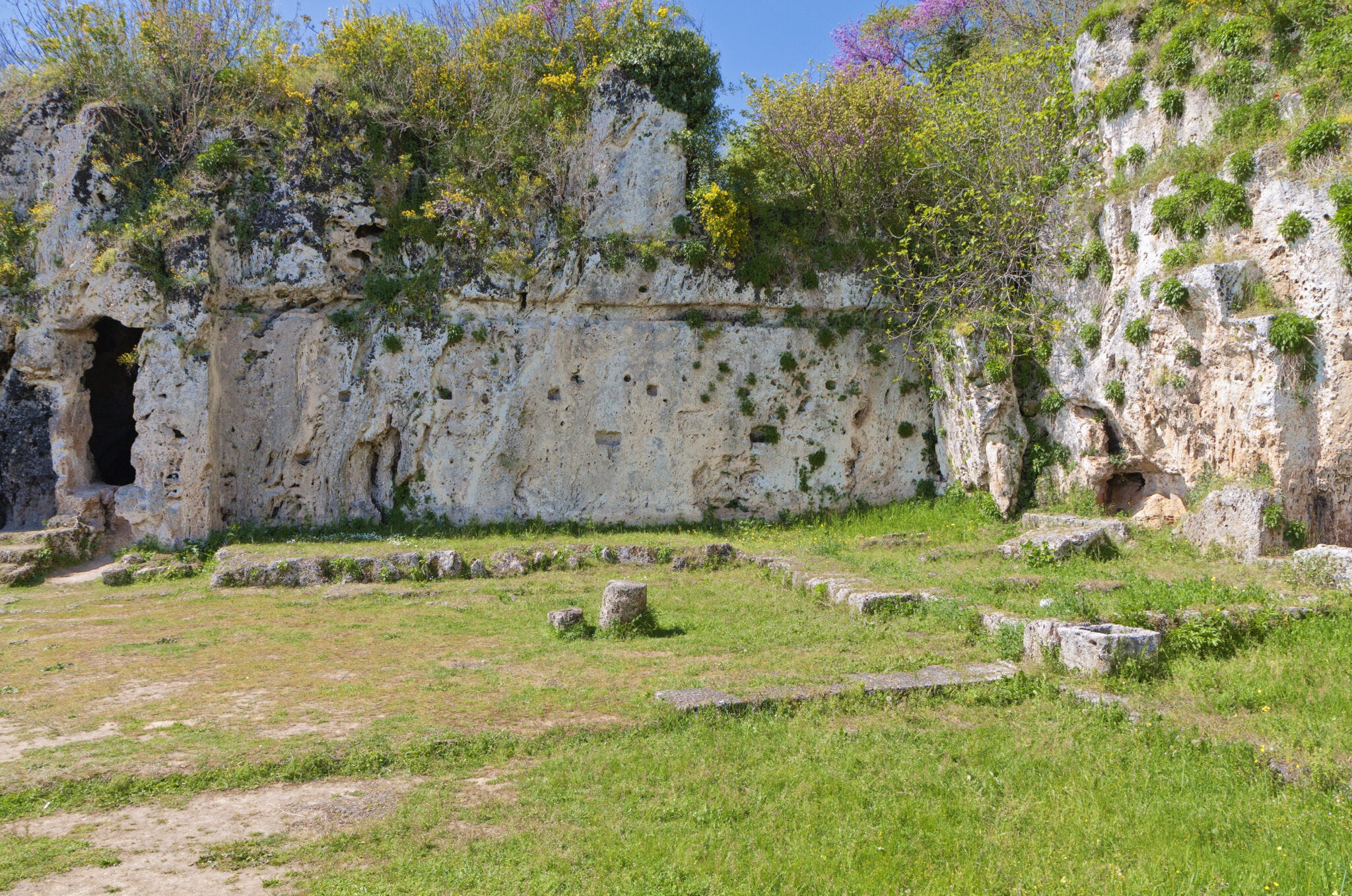
So Alexander became a pupil of Aristotle, and Philip gave them “the temple of the Nymphs near Mieza as a place where they could study and converse, and to this day they show you the stone seats and shady walks which Aristotle used.“
It’s 2026 now and my daughter is the same age as Alexander was then and about to enter high school. I have no kingdom for her, but I am a justifiably proud father and I hope for a long and meaningful life for her. We’ve just chosen the high school she’ll attend for the next four years. Some people were surprised by our choice.
We live outside Washington DC and are very fortunate to have plenty of good public and private options. There were two schools at the end of our search, both Catholic and all-girls. Both have exceptional reputations and check all the usual boxes of a college preparatory private school. The differences between them aren’t found on a brochure.
One is more than two hundred years old on an all brick campus steeped in heritage and prestige. While the tradition is the liberal arts, they’ve remained competitive with the expectations of upper echelon college preparatory schools and all freshman receive an iPad with their textbooks preloaded. The other school is only 20 years old but there are no devices. Freshman read the Iliad and the Odyssey on paper. Latin and Italian are required. There is no computer class or department. It feels like the closest thing to a classical school from fifty years ago that you can find.
The differences have to do with the people and the environment and what they believe about forming humans. Twenty years ago, the resume bullets were probably enough. It was reasonable to prepare a kid for a world with a steady career and a mainstream set of values.
That world has fractured and a new world has invaded our daily lives. Phones have made all of the most urgent and radical ideas of our world available for hours every day and AI is turning computers into agents with their own skills.
The most important step to consider in school choice and education is: what are you educating for? Most schools optimize for credentials and hope the rest works out. But is a school’s role to build a resume or to form the kind of person who doesn’t really need one?
We chose the school with classical Latin and no screens. There were many other reasons for our choice: cost, location, and faith. My wife, daughter, and I all had overlapping perspectives for why we ended up at the same place.
I want to explain mine because the terrain of education is so different today.
Capacity Before Tools
Technology is the set of tools we use for leverage. In order to use tools well you must first develop the capacity to use them. The more complicated the tool, the larger the capacity required.
If software has been the star at the center of the technology world, then the vibecoding phenomenon is the last dramatic burst of energy during a supernova. I don’t know what comes next. Nobody does.
But I know I don’t write code any more, the LLMs are too good. And yet there’s more engineering work than ever and I’m more excited than ever. There’s always new ideas in the world and old ones I haven’t learned yet. There’s always more to build, and it’s easier than ever to get started.
Formation is the word I keep coming back to. And it’s the goal missing from how most people think about education. Instead of a series of resume points and a collection of standardized test scores, formation is how education shapes who you are as a human. It’s about what you’re made of — the depth of your reading, the clarity of your thinking, what you value in morally ambiguous situations, your capacity to reason about complex systems, your habits of discipline and attention. In the new world where AI can beat you on a standardized test, this is the layer that counts.
Dario Amodei has a framework for what makes an AI model good, and it maps to childhood in a rather unsettling way. First you need a lot of compute. In humans, that’s a matter of genetics. You also need a large amount of high quality data. That’s years of reading, writing, conversation, experience, and challenge. And you need to train a model for a long time. That’s at least 18-20 years (and preferably a lifetime). And you need an objective function for what the model should do. Humans have plenty of these, but the best one, the one that philosophies keep coming back to, is virtue.
I joked years ago that I was building three baby AGIs but the metaphor isn’t that far off.
Data quality in this regime is underrated. There is a difference between reading Homer and watching TikTok reels, and the difference is not content. The difference is cognitive effort. If you have to make it happen in your head, it’s building something. If you can passively consume it, it’s noise. And that’s exactly what most kids are getting for hours every day during growing years that matter most.
Gorging on information starves formation.
The new and fashionable claim is that anyone can build software, anyone can make anything, and the new tools have democratized creation. But watching people use AI demonstrates how deep the differences are. AI acts as an amplifier: some people can do the work of a whole team from just a couple years ago. Someone without a good foundation uses AI the way you’d use a calculator: it gives them an answer, and they accept the first output because they can’t imagine a better one. In short, a person has to be built up enough to leverage what the tool provides.
Where people are on this spectrum has to do with their formation. Building up a substantive model is exactly what classical education provides. Centuries of trial and error have refined how we best develop humans to practice logic, rhetoric, sustained attention, moral reasoning, and comfort with intellectual challenge. It shapes not just capabilities and skills, but also virtues and values. It’s what college prep promises but often fails at.
Andrew Cantarutti calls this focus The Emancipatory Wager. He says that we need to “build capacity before offering tools that can substitute for it.” Kids shouldn’t avoid AI because it’s bad, they should avoid it because the more they develop their own capacities, the more expressive and amplified their capabilities will be with AI.
This is what I was thinking about when we chose a school.
A Portrait of Her Days
Next year, my daughter’s school day will start with Homer and it will end with her own thoughts (since she has no phone) and in between there will be no screen to interrupt the passage from one to the other. The class will go through the entire Iliad together, reading on paper, and occasionally out loud. She will conjugate Latin verbs and stumble through elementary Italian. There’s no online homework. No iPad is distributed at orientation with textbooks preloaded next to a messaging app. She’ll head onto the field with her sports team, chatting and laughing with her friends. Most of them won’t have phones either. This is what we chose.
At another school, a freshman opens her iPad and her English textbook appears alongside every other app the device can run. She is fourteen and she has the discipline of a fourteen year old, which is to say the discipline of someone whose prefrontal cortex won’t finish developing for another decade. Somewhere during the second act of Julius Caesar a text arrives (because of course she hooked up her personal account). Then another. She context switches. The text is from a friend and is about nothing and is urgent in the way everything is urgent when you’re fourteen. She flips back to the play but she’s lost Brutus’s soliloquy. The words are there but the thread has snapped — the magic of feeling the accumulating weight of a man reasoning himself toward something unthinkable. That thread is what classical education seeks and it snaps when attention fragments. When the whole world is trying to steal your attention, threads rarely connect.
Why Shakespeare? In Shakespeare you train on pattern recognition across human motivation and moral reasoning under ambiguity. You learn comfort with complex language and new vocabulary. The reason Shakespeare feels hard is because it increases your capacity just like lifting heavy weights increases your strength.
My daughter will read the same soliloquy in ink instead of pixels. Her only option when the passage gets difficult is to stay with it or stare out the window. Both of those are fine. The first trains sustained attention; the other is boredom, where every original thought she’ll ever have begins its life. There is no third option to offer relief and take the effort away.
Daily constraints are a decision against the noise of the world. No device means no context switching. A fourteen-year-old working on a Latin sentence is working hard. We like to fake productivity and tell ourselves we’re learning by swiping Duolingo on our phone but I’ve never met anyone who actually learned a language that way. They’re too busy swiping over to TikTok in between each checkpoint.
The curriculum at her school isn’t radically different from any strong college prep school. What’s different is everything around it. The screens are gone, the families all chose this on purpose, and the expectation is that difficulty is normal.
Here’s the thing, I have no idea what my daughter will do in ten or twenty years. Neither do you or anybody else, the world is changing too quickly. I don’t want to hide her away in a monastic school and pretend the 21st century isn’t happening.. it’s the opposite! I know that she can build more capacity now by reading ancient texts on paper and developing math skills with a pencil than she ever could tapping her homework answers on a screen while juggling notifications. I wanted this school because of what’s coming.
I can’t wait to hear what my daughter thinks of Brutus’s decisions. I hope she’ll come home thinking about it, wondering about the virtues and tensions in his character. She might still be thinking about her vocabulary words during field hockey. And on a walk home, she might be worrying about how to finish the last page of her essay.
Or maybe she’ll just be daydreaming, conjuring castles out of clouds and dreaming of places she’ll one day travel and dragons she’ll one day slay.
Reading and Writing
Two skills matter more than everything else. Charlie Munger said he never met a wise person who didn’t read all the time. Not one, in a lifetime of meeting wise people. This has always been true and everyone nods along and nobody takes it seriously enough.
Reading is the oldest technology for building a mind and it’s still the best one. When you read seriously, following a complex narrative across hundreds of pages, you are doing something that no other medium replicates. You learn how words are tools for both thought and decoration. A person who has read widely and deeply for twenty years has a richer, more densely connected interior world than someone who hasn’t, and that interior world is exactly what AI amplifies. You can become a centaur capable of things neither the human nor the machine could do alone. A shallow reader with AI gets autocomplete.
Writing is thinking made visible. It’s how humans compress experience into transmissible form, how we discover what we actually think as distinct from what we vaguely feel. Anyone who has tried to write a clear explanation of something they thought they understood has discovered the gap between the feeling of understanding and the real thing. Writing closes that gap or reveals that it can’t be closed, and both of those are valuable. Machines can generate fluent prose on any topic in seconds now, so what do you want them to generate? The ability to think clearly is the whole game, and proof of that ability is what writing is. If you can’t articulate your ideas, they’re meaningless.
AI is making literacy more economically and personally valuable than it has been in a generation. And at the same time, our culture has handed every child a device that systematically destroys the capacity for both. Short-form video is the lingua franca of the internet now. Most kids get predominantly passive, algorithmically optimized content that requires no cognitive effort whatsoever, delivered in fifteen and thirty second doses calibrated for addiction.
This is not a “Screen Time” problem. It’s not something you’re just supposed to limit. It is a formation problem. We are getting less literate just when literacy matters most.
Boredom
A kid needs projects. Something they choose, that they own, that nobody assigned. It doesn’t matter what it is. What matters is that the impulse came from them. Paul Graham encourages his kids to go “preposterously, bus ticket collectorly, deep” into whatever catches their interest. He wants them to feel the joy of learning, and they’ll never feel that about something he’s making them do. Depth is a byproduct of joy.
Parents instinctively try to steer their kids toward projects they find valuable for maximum resume impact. But the value of a project is ownership. A kid who spent three years obsessively cataloguing every train station in the Northeast Corridor has learned something about attention, curiosity, self-directed research, and the pleasure of mastery that transfers to anything she does next.
Projects like this emerge from boredom, and boredom is something we have nearly eliminated from childhood because every idle moment is filled by a phone. Boredom is uncomfortable and looks like nothing is happening and that’s why parents rush to fill it. But boredom is the space where a kid discovers what they actually care about when nobody is providing the answer. It allows consolidating, wandering, making unexpected connections.
As AI becomes more capable, the most important skill left is deciding what’s worth doing. Terry Tao recently said the cost of idea generation is moving to zero, but judgment is still valuable. Aristotle’s word is phronesis: practical wisdom. You train this by doing things that are yours. And you find things that are yours by exploring when you’re otherwise bored.
Environment
You can do everything right at home and still lose if the environment is working against you. This is the tragedy of the commons Jonathan Haidt talks about. You can choose the books and limit the screens and eat dinner together every night, and if your daughter’s closest friends have unrestricted phones and parents who think formation has something to do with rocks, then your battle is twice as hard.
We talk endlessly about drinking, bullying, and social media. But peer pressure works in both directions and the positive version is extraordinarily powerful. A kid surrounded by other kids who read with joy, who find Latin annoying but do it anyway, who think it’s cool to serve at Mass, who talk about ideas at lunch because that’s just what their friends talk about — that kid is being formed by forces that no parent and no teacher could manufacture alone. The culture of a peer group does more cumulative work than a curriculum.
What you are really choosing when you choose a school is a group of families. It’s not about the textbooks and the teachers. What you are really choosing is the parents of your kid’s peers. They’re the other decision makers. The parents who send their kids to a school with no devices and required classical languages have made a set of decisions about formation that broadly align. They share an instinct about what childhood is for, and that creates an environment where delayed gratification, boredom, and sustained intellectual effort are normal rather than eccentric. At this school, a kid isn’t an outcast for not having a phone. She feels like she belongs to a community that has thought about this and chosen deliberately.
The families don’t need to be religious, though we are and the school is. What matters is that they’ve asked the question seriously: what are we forming our children into? The answer should be clear and substantive. For us, it’s rooted in faith. And because the school is rooted in faith too, it means the life of the Church doesn’t remain the domain of obligatory Sunday mornings; it becomes vibrant and visible.
School is not supposed to be a bubble, even if a child should be protected while they are still being formed. Kids need exposure to people who think differently, who come from different traditions, who challenge assumptions. A formation that can only survive inside a glass palace is no formation at all. But there’s a difference between openness and formlessness. A kid needs to learn how to have virtues and convictions and the intellectual capacity to engage seriously with disagreement. If you can’t walk into a room and hold your own, you’ll absorb whatever room you walks into. Openness without formation is surrender to the loudest signal.
Alvaro de Vicente provides the wonderful image of Aslan as an example for boys. When the children ask Mr. Beaver whether Aslan is safe, he responds: “Safe? Who said anything about safe? ‘Course he isn’t safe. But he’s good.” Alvaro writes of a young knight kneeling in prayer during a vigil, his sword and shield beside him, his head bowed. He has weapons. He is not safe. But he is good, and his strength has been given direction.
The goal of formation is to produce people like this: capable and oriented. Dangerous in the best sense. The kind of person who can walk into a chaotic world and improve it rather than be consumed by it. AI is a whole new kind of sword we are called to wield.
Matter Without Form
Not all kids get this kind of environment, and it’s not their fault. A college prep grad can do everything right. They can clear every hurdle and ace every test. They’ll have a perfect GPA, loaded resume, elite university, and a good job offer. They climb the ladder and arrive at the top and find that nobody told them what the top was for. They have been trained to achieve and given nothing to achieve toward.
We all know these people. There’s a whole generation of people not sure where to go next. The twenty-eight-year-old living at home, optimizing his sleep score and his supplements, meticulously tracking inputs to a life that has no output. The thirty-something couple who got engaged years ago and want kids “someday”. They can’t set a wedding date because no one ever taught them what commitment is for. The new graduate with a prestigious degree and an empty LinkedIn bio except for a litany of credentials.
These aren’t broken people. They’re unfinished ones. They have extraordinary capacity and no animating purpose. Aristotle had the metaphor exactly right: they are lumps of bronze in a workshop. The material is good. The statue is in there. But schools and parents failed them by being too comfortable and too empty. Nobody did the work of forming them, and it’s difficult to form yourself if no one showed you that formation was the project in the first place.
A Modern Mieza
When Philip sent for Aristotle it was because he wanted his son to be shaped. Raw ability alone was not enough. It required a particular kind of instruction with a particular kind of teacher in a particular kind of place over a particular length of time. Even the stone seats and shady walks near the temple of the Nymphs at Mieza had a part to play.
I have no idea what the world will look like when my daughter is 25. I don’t know what tools she’ll use or what work she’ll do or what challenges she’ll face. They probably don’t even exist yet, the pace of change makes prediction so absurd. But I know that a human is capable of adapting and questioning and leading when they are well-formed.
Aristotle uses the word telos to describe the end towards which anything is directed. The Western tradition, long before adding a Christian expression, focused on the good, the true, and the beautiful. When a school has a mission and faculty and parents that care deeply about the children enrolled and their virtue, the children know the difference. Virtues like wisdom, justice, courage, temperance, among others, are the backbone upon which the entire academic program is framed. This becomes a difference in kind and this is how you answer the singular question that matters about formation: what are you making?
We chose a school with stone seats and shady walks, one that trusts the millennia of Western tradition in more than just the curricula. They have Latin and paper books and long, patient years. They believe, as I do, that a fourteen-year-old girl is a remarkable statue waiting to emerge, and that the emergence requires effort and time and an unwavering sense of what the work is for.
Humans are not so different from one another across the centuries, even if our technology and tools are changing faster than ever. The instinct that Philip had for his son — find the best teacher, protect his formation, and give it time — speaks to something permanent about what we are.
We may think we live in a different world, but what our kids need to form into competent, virtuous humans is the same as it was for Alexander.