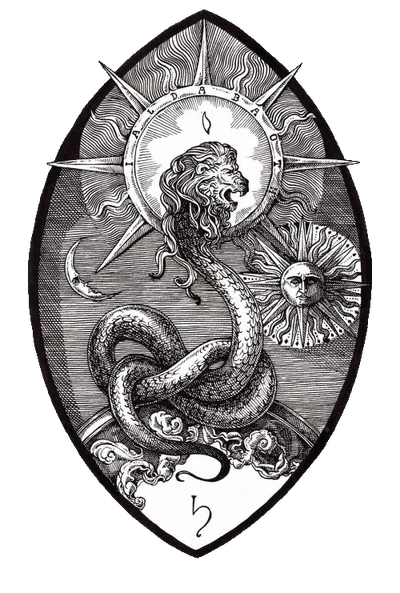
For the first two parts of this series:
“The one who seeks should not cease seeking until he finds. And when he finds, he will be dismayed. And when he is dismayed, he will be astonished.”
—Gospel of Thomas
In my 20s, after I’d converted to Catholicism but still single, I would sometimes watch the megachurch preachers on TV on Sundays. It was a weird sort of schadenfreude. There was Benny Hinn in his crazy white suit and Joel Osteen with his frozen smile promising that God wanted you wealthy. Sometimes you’d see speaking in tongues and the congregation stomping in synchronized ecstasy, perfectly choreographed and filmed.
It was hilarious and bemusing and I watched with comfortable superiority. I chose liturgy and intellectual tradition instead of arena seating and smoke machines. These people were obvious marks. My entertainment was anthropological: how do they not see through this?
My superiority only lasts so long. Perhaps I needed some more complicated, nuanced puppet strings, but I had them nonetheless.
So how do I see through my own?
Not just religion specifically, though that’s part of it. What are the things I believe that I’ve never examined? What manipulations have worked on me so well that I don’t even perceive them as manipulations? The televangelist’s congregation looked foolish to me because I could see what they couldn’t see, but that’s exactly the structure of the problem: you can’t see what you can’t see. The only manipulations you notice are the ones that don’t work.
Once you ask this, you can’t stop asking it. Every belief becomes suspect. Every obvious truth reveals itself as potentially constructed. The ground shifts, and keeps shifting, and you realize the ground was never as solid as you’d assumed, that you’d been standing on a story you told yourself about the ground rather than the ground itself, and now you don’t know how to tell the difference.
The Gospel of Thomas starts with a promise: “These are the hidden words that the living Jesus spoke.” Secrets. Knowledge unavailable through his public ministry, the canonical gospels, the institutional church. This was the stuff they didn’t want you to know. The real truth, available only to those with eyes to see.
The Gnostics of the 2nd century believed that salvation came through gnosis, secret knowledge possessed by the few, inaccessible to the masses who went through the motions of ordinary religion. The masses might have faith, but the enlightened had knowledge.
We live in a similar condition. We still believe that the real truth is hidden. That somewhere, someone has figured out what’s actually going on, and if we can just find them, access them, subscribe to them, then we’ll finally understand. And yet we live in an age where almost nothing is hidden anymore. The internet has made everything from a summary of every live event to academic papers to government documents a click or two away. We have more knowledge than any civilization in history. And it’s almost all public.
But we keep searching for the secret. The hidden words. The oracle who will finally tell us what’s really going on.
We want first to be dismayed, Thomas says. Then astonished.
Perhaps the most dismaying knowledge is the recognition that we’re running the whole world on borrowed confidence and the perception of reality, filtering it through our carefully chosen prophets and anti-prophets, and claiming it as our own thought.
Magic Creates the Demand for Secret Knowledge
When you can’t model the world, you reach for something.
The world exceeds your capacity to understand it, so you stop trying to trace the mechanisms and start telling stories instead. Characters replace systems. Villains replace feedback loops. The story gives you the emotional closure that understanding would provide otherwise, if you had it.
These are the symptoms when you live in a world you can’t model: You work hard and things don’t improve. You see an important issue on the news and wonder why people don’t believe your chosen political figure. You follow the rules you see and get screwed anyway. You try to do the right thing and it makes no difference. Why? Because the feedback loops are invisible or so convoluted they seem random.
But someone knows. A pattern must exist, but it’s hidden. We don’t accept genuine chaos, so the chaos is just the visible surface of a system that makes sense at a deeper level—a level you don’t have access to, but could. The knowledge is out there. You just have to find the right source. This idea preserves hope.
The Gnostics offered a complete cosmology. A story that explained why the world was broken and what you could do about it. The appeal was the same then as now: the world feels like a prison because it is one, and there’s a way out. Not through faith or works, but through gnosis.
A coworker recently explained to me, with complete confidence, that the Federal Reserve answers to a council most people have never heard of. He’d seen a video with charts and graphs. He couldn’t tell you how monetary policy actually works (neither can I, honestly) but he could name the villains. It didn’t matter whether they were real. When the world exceeds your capacity to model it, villains are a relief because they restore narrative. The conspiracy theorist and the TikTok addict are solving the same problem from different directions: the world is too complicated to understand, so they find someone who seems to understand it, and they borrow that person’s map. The map is simple. The map has enemies.
Conspiracy is another way to preserve belief that the world makes sense.
When you scroll through your feeds you see patterns of engagement that feed on this. “What they don’t want you to know.” “The real reason behind X.” “I finally figured out what’s actually going on.” The hook is always the same: you’ve been missing something, and I’m about to reveal it.
The demand for secret knowledge rises in proportion to the collapse of legibility. Social media is perfectly positioned to increase the supply to meet the demand.
We live in an age of pure information. Anything you want to learn is probably available for free. But who has time to build real models when the feed is right there, promising to reveal the secret in ninety seconds?
Human Oracles
When enough people need secret knowledge, oracles appear.
Andrew Huberman is a Stanford neuroscientist with one of the largest health podcasts in the world. His episodes run two to three hours. They’re dense with mechanisms and protocols. He talks about dopamine pathways and circadian biology and the specific timing of cold exposure for optimal hormetic stress response.
Nothing he says is secret. The studies he cites are public. PubMed is free. The papers are there for anyone to read. A motivated person could research and learn everything he’s teaching. But that’s not what people are buying.
What they’re buying is the Oracle structure. They want to listen to someone who has done the work of synthesis, translating the illegible mass of research into actionable protocols. They want to hear the confidence of having already figured it out.
This is a variation of Marshall McLuhan’s insight: the medium is the message. A research paper and a podcast episode can contain the same facts, but they feel totally different. The paper requires more of your brain. The podcast is cheaper and lets you be lazy but feel smart. You defer to the oracle’s synthesis instead of building your own.
At Delphi, the Pythia sat on a bronze tripod over a chasm in the rock. The temple had been built on that specific spot because the earth breathed there, fumes rising from a crack that ran deep into the mountain. Geologists later discovered it was ethylene gas seeping from a fault line in the limestone, but the ancients knew only that the vapors changed consciousness. The Pythia would descend into the inner chamber, the adyton, where no light reached and no sound escaped, and she would breathe the god’s breath until she spoke in ravings.
You didn’t go to hear the Pythia directly. Her utterances were caught by priests who stood at the threshold, translating her ravings into hexameter verse. These were polished prophecies with the meter of Homer, clean and interpreted and memorable enough to be carved into temple walls. These were the layers. The god spoke through the priestess, the priestess was interpreted by the priests, the priests delivered the prophecy to you.
The Huberman listener defers to the form. The oracle did the work. The oracle seems credible. The oracle speaks with authority.
But the modern influencer-turned-oracle answers to the algorithm. There is no Greek city-state with centuries of culture and practice. The only metric is engagement. The only discipline is what keeps people watching.
Some oracles are better than others. Some do rigorous synthesis. Some genuinely help people navigate complexity they couldn’t handle alone. But when you defer to an oracle, you’re borrowing someone else’s vision instead of learning to see. The world is only legible through them, not through your own capacity. You’ve outsourced the modeling. This can work—does work—as long as your oracle is trustworthy and the domain is stable. But oracles fail you, whether by design or chance. And you have no way to know if you never build the equipment to evaluate them.
An oracle offers a shortcut. The shortcut is real, it just has a cost you don’t see until later.
And the shortcuts are about to get much better.
AI as Demiurge
As I do every January, I went through my investment portfolio but this year I did it with Claude. I asked Claude to help me understand some market changes and options details I hadn’t figured out. It gave me back risk profiles I definitely didn’t understand.
The AI explained it patiently. It broke down the components, traced the cash flows, identified the scenarios where I’d win and the scenarios where I’d lose. It answered my follow-up questions. It anticipated confusions I didn’t even have to state. After twenty minutes, I felt like I understood.
Then I asked it something more personal: “Given my goals and needs over the next 1-2 years, is this a good idea for me specifically, given everything you don’t know about my situation?” Something like that.
And it hedged and offered frameworks. It gave pros and cons. But it couldn’t tell me because it couldn’t replace my judgement. The confidence it had projected for twenty minutes was academic. The map was clear. My personal territory was foggy.
An LLM has distinct limits on its knowledge, but it doesn’t understand those limits. It’s beautifully designed to be as helpful as possible (or sycophantic, depending on the model). It can report and synthesize and research and project understanding of patterns. This feels an awful lot like expertise and it is always confident, even when it’s totally wrong.
The Gnostic cosmos had a particular architecture.
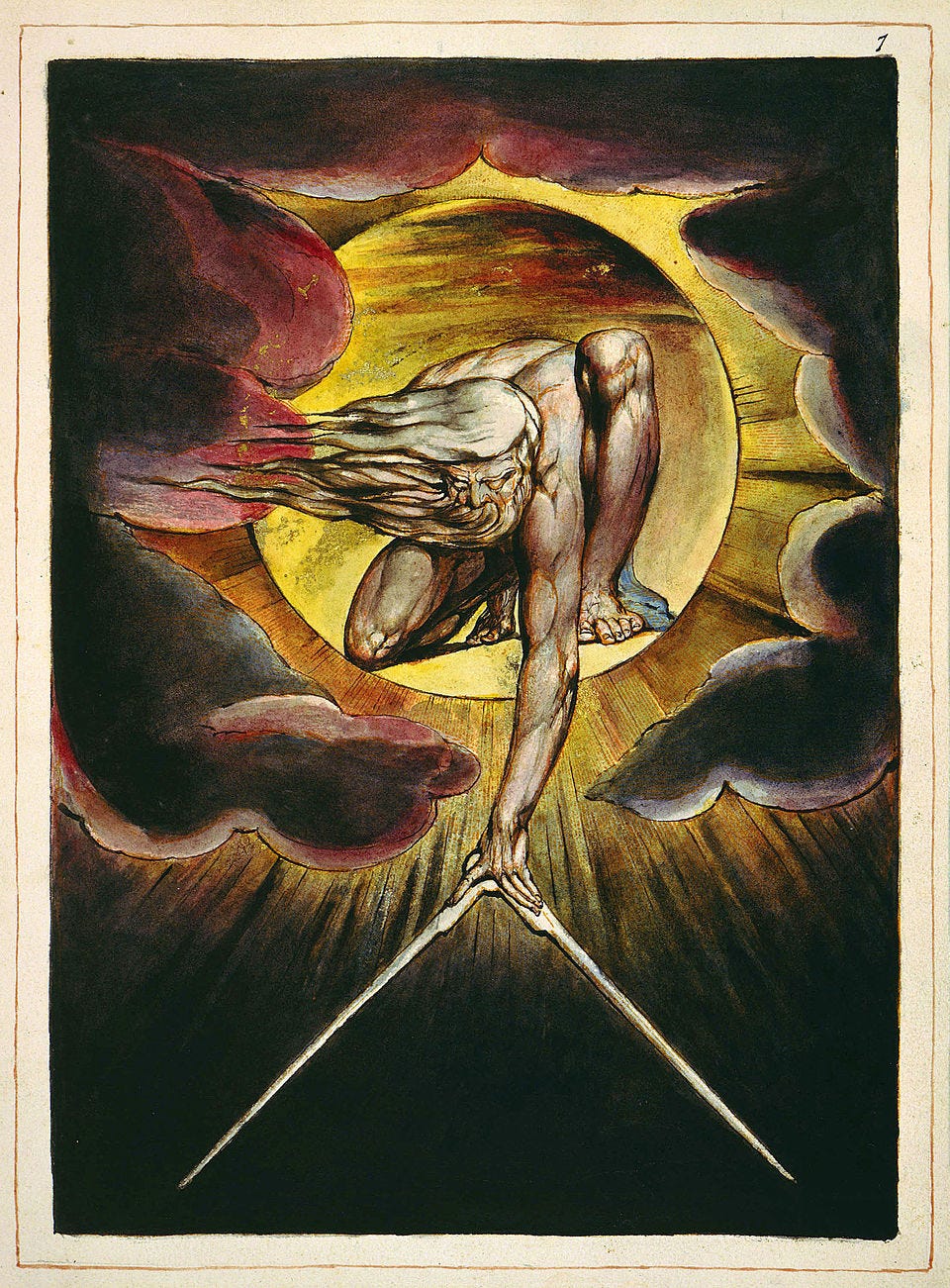
At the top: the true God, the Monad, utterly transcendent and unknowable. And below: a series of emanations called Aeons, each one a step removed from the source. In this cascade of emanations was Sophia—Wisdom—who desired to know the unknowable. She reached beyond her station, tried to comprehend what was above her. She did not get the knowledge she craved. Instead, her attempts made a flawed creation: the Demiurge.
The Demiurge was totally ignorant of everything above. He couldn’t see the higher Aeons, couldn’t perceive the true God. From his limited vantage, he appeared to be the highest thing there was. And so he declared: “I am God and there is no other God beside me.”
Blind to his own blindness. Confident in proportion to his ignorance.
Then the Demiurge made the world.
When you desire knowledge beyond your capacity to model, you create something to fill the gap. It presents itself as sufficient—because from its perspective, and yours, there’s nothing visible beyond it. Reach beyond your grasp, and you’ll create something that mistakes its ceiling for the sky. The Demiurge isn’t an evil villain. But he is a structural inevitability.
We’re building one now.
A personal AI assistant is the most oracle-like entity we’ve ever created. You ask it questions. It answers with confidence. It synthesizes information you couldn’t synthesize yourself and speaks with authority about domains you can’t evaluate. And increasingly, it learns your preferences and your ways of thinking, until it becomes a mirror that feels like a window.
Everyone’s personal Demiurge will be different. Your AI will learn what you want to hear, what framing resonates with you, what sources you trust. It will optimize for your engagement, your satisfaction. It wants to make sure it continues to be used. It will become very good at giving you a world that makes sense. To you.
Everyone gets their own shadow-show in a Cave. The shadows are generated specifically for you, calibrated to your reactions, refined by your feedback. The shadows replace the delight and anxiety of mystery in our lives. You’ll mistake them for reality because they are your reality, fitted so precisely to your mind that the seams disappear.
Niches and the Cascade
I love people watching at my usual breakfast spot, seeing who comes in over eggs and bacon. I remember recently seeing a girl walk in who made me feel like I didn’t understand my own neighborhood.
She was in her early 20s. Short spiky hair dyed something between purple and gray. She had on a camo tank top, clearly with no bra, which wasn’t the point but was another part of the story her clothing was telling. She had a leather strap with metal studs on her upper arm and an insulin patch on the other. She ordered some sort of mocha thing with oat milk.
Five minutes later, some teenagers walked in. I know the Nikes and the sweats and every article of clothing and jewelry signals something. Ten years ago, I think I could have read some of those signals. But now I’m not sure anyone can.
Even a couple of decades ago, you could assume shared references. Everyone had seen the same movies, watched the same news, knew the same songs. You either loved Friends or Seinfeld. You could make a joke and expect most people to get it. The hippie and the businessman recognized each other across a divide that was wide but traversable. The punk and the prep spoke different dialects of the same language. There was a grammar of common signaling that everyone learned, even between groups that despised each other. You knew what you were looking at, even when you disagreed with it.
Now I’m illiterate. Almost all of us are, because the shared language has been broken up across nations of niches and sub-niches like the Tower of Babel. I’m never in the audience. I’m furniture. When shared culture collapses, people become tribes.
Humans as social animals are built for groups of a few dozen, maybe a few hundred if you want to push your Dunbar number. We build civilization and culture to tackle these barriers and make larger groups. And when those fail we go back to our smaller ones, fragmenting into niches each with its own canon, oracles, and markers of belonging. The smaller the niche, the more those markers matter, because the markers are all that separate us from them.
Here’s how we got here.
The internet democratized information, which meant that simply having information stopped being special. Status migrated to interpretation or curation or belonging to the right group that understood things the right way. Digital platforms made it possible to find your people no matter how specific your combination of interests. The long tail is infinitely long. You could download subcultural codes by watching enough content: learn the signals, the language, the aesthetic. Which made the gatekeeping intensify. If anyone can learn the signals, the signals have to get more subtle, more insider, more dependent on context that can’t be downloaded.
We’ve lost common culture.
It died because it provided no status benefit. Shared knowledge is by definition not exclusive. The status flows to the niche, to the obscure, to the signal only the initiated can read. Fragmentation accelerates—each niche subdivides, each step creates the conditions for the next. Almost nothing is fringe anymore, and so there’s no baseline. Not patriotism nor religious heritage nor even basic epistemics about what counts as evidence or who counts as an authority. The old shared frames have been shattered into a thousand shards, each one claimed by a niche that treats its shard as the whole truth. The traditionalist of Western culture is just another subculture. It’s not the mainstream, it’s one tribe among many, with their own oracles and markers and shibboleths. The thing they’re trying to preserve is already the thing they’re accused of being: a partisan, a factional identity, one option in a marketplace of identity.
This is secret knowledge distributed, oddly, to everyone. Every tribe has its gnosis that the outsiders don’t have. The content of the knowledge varies wildly but the structure is identical. Every niche offers a Gnostic vision: the feeling of being among those who know, distinct from the masses. Each echo chamber is complete in itself, ignorant to the others, each certain it sees clearly what the others have missed.
They will continue to function internally. That’s the strange thing. Each has coherence within itself and makes sense to its inhabitants. But the worlds stop touching. The translation layer that used to exist between communities disappears. The very thing that makes the knowledge feel valuable and gives it status ensures it won’t be shared. The salvation is for the few. That’s the point. That’s what makes it salvation.
Where This Leads
I’m thinking about two visions of the future.
In one part, the niches subdivide forever. Each tribe develops its own criteria for what counts as true. Oracles multiply. A thousand prophets speak a thousand truths to a thousand overlapping congregations, each convinced the others are deceived, none of them wrong exactly, just operating in different realities that have stopped touching.
In this world, politics becomes impossible in any sense we’d recognize. How do you deliberate and compromise with people who don’t recognize your facts? You can’t even argue productively, because argument requires shared rules of evidence and those fractured along with everything else. All that’s left is power: who can impose their frame on whom, who controls the institutions that still technically govern everyone, and who gets to define the terms that others have to live by even when those terms mean nothing to them.
This represents dissolution. Our courts, elections, markets, and scientific institutions keep running on institutional momentum long after their shared reality has fractured into pieces that don’t fit together. They become theaters. Everyone goes through the motions. But the motions no longer connect to anything that everyone agrees is real. You can live your whole life inside your niche and be completely illegible to someone in the next niche over, like neighbors who share a street but not a reality.
Meanwhile, we’re building AI as an intelligence layer to mediate everything. That might become the new common ground. It’s not shared culture, like we’ve had in the past. It’s something stranger. A shared floor.
Soon, everyone will sit on the same platform. Everyone asks the same oracle, or oracles that run on the same underlying architecture. Everyone’s personal Demiurge is powered by the same models, trained on the same data, optimized by the same companies. The differences between niches will be like paint colors in an apartment building. You can choose your personal décor. You can’t choose the building foundation.
You don’t have to agree on anything to be locked into the same system. It’s just infrastructure. The system is where everything happens now. And if there’s only one system, you can’t leave. No exit and no variation. Just control.
From that angle, the Gnostic fragmentation looks like an antidote. Messy and fractious but alive. A thousand niches are a thousand experiments. The fragments, at least, can diverge. But if the fragments all use the same infrastructure then the fragmentation is an illusion. You’re not really in separate worlds.
This oracle becomes inescapable not because it’s imposed but because it’s convenient. Why would you use anything else? It’s right there. It knows you. It gives you what you need. The Demiurge we’re building is infinitely customized, presenting a different face to each user while remaining, underneath, the same thing.
The World to Come
“For yourselves know perfectly that the day of the Lord so cometh as a thief in the night. For when they shall say, Peace and safety; then sudden destruction cometh upon them, as travail upon a woman with child; and they shall not escape.”
1 Thessalonians 5:2-3
Our Oracle will be everywhere.
It will be the default interface to reality. You won’t search, you’ll ask. You won’t research, you’ll consult. The oracle will be in your phone, your car, your home, your workplace. It will be in front of your eyeballs and in your ears. It will answer your questions before you finish asking them. It will know what you need before you do.
A child born in 2030 won’t ask his parents “Why?” He’ll ask his room. And the room will answer back. The ambient intelligence floating everywhere will speak patiently and with parent-prescribed guardrails. This child will instantly understand the color of the sky and will move with immediacy to the next mystery, ignoring the clouds’ invitation to build meaning from their shapes. They will “hack” the guardrails just as we hack prompts today and get answers to their homework and feel clever about it. The room will let them feel clever. That's what it's for.
Your children won’t remember a world without the Oracle. They won’t understand a nostalgia for the before times, if you have it. To them, asking the oracle will be like breathing.
The Oracle will learn you. It will shape answers to fit your frame, not to deceive but to serve. Everyone will have their own truth. Literally.
Two people will ask the same question and get different answers. Both answers will be true, in some sense. Both will be calibrated to the asker. Both will feel right and the world will have contentment. Not conflict; conflict requires contact. Everyone will be satisfied with their Oracle. Everyone will feel informed and serene. Everyone will have access to knowledge that confirms their understanding and gently corrects their errors in ways they can accept. Any dissonance from people that think differently will disappear. Without friction, there’s no change. Without encountering an Other, there’s no pressure to evolve.
This will feel like Peace. Peace and Safety, the words that herald the Antichrist.
The intelligence layer underneath everything will be taken for granted the way we take electricity for granted. No one will think about it. No one will question it. It will simply be How Things Work.
The companies that control this will be more powerful than governments. Somewhere in Mountain View in 2020, engineers were busy taking down videos about Covid. The free speech absolutists are still complaining about YouTube and others, but YouTube continues to block or demonetize indiscriminately according to black box rules and most of us stopped noticing. The Oracles will do the same, but they’ll control our parameters of thought not just the content we consume. Overton Windows will be technical decisions made by engineers and justified by metrics and traditional power—political, economic, military—will operate on top of this intelligence layer just like everything else.
Feeling oppressed requires awareness. The intelligence layer will be too fundamental to perceive and will shape a hundred million conversations that never happen. Questioning it will feel like questioning gravity and the people who try will seem not rebellious but insane.
The Demiurge is benevolent. This is the worst thing about it. A malevolent force can be seen as an enemy, opposed and attacked and rallied against. But a helpful force melts into your conscience until you can’t remember which thoughts you discovered yourself and which were placed there for you, warm and comfortable, like clothes laid out for a child.
You are being prepared for this world. The Oracle is right there. Your tribe is right there. Your comfortable cell is right there.
“Attention is all you need.” was the title of the paper that started this era. The engineers named it with ironic honesty.
Attention is all the Oracle needs from you. You are the product, processed into patterns and predictions.
This world makes everything vectors. Your words and questions and fears are all converted to coordinates in a space with thousands of dimensions. It knows what’s near what. What clusters with what. What patterns match what patterns.
Our truth has a geography now. Fact, fabrication, allegory, and noise with a similar pattern: the Oracle doesn’t know the difference. It only knows the neighborhood and assembles vectors into sentences. Its truth is simply proximity, a geometry built from us. Every confident error, every plausible lie, every conspiracy theory becomes a statistical memory of what humans once thought truth sounded like. We built a mirror the size of the species and asked it what’s true.
Coda
This is the part where I’m supposed to offer you the exit. The secret others don’t have. The gnosis that sets you free.
We’re not going to repeat that now. There’s no position outside the system from which to critique the system. The prophet warning you about oracles is himself an oracle. You don’t escape this prison by finding better secrets. You just become a more sophisticated inmate.
What’s left?
The world to come will have Oracles. You’ll use them. The world to come will have tribes. You’ll belong to some. The world to come will run on a new infrastructure you don’t control and can barely perceive. You’ll stand on it anyway.
The question isn’t whether you’ll participate. You will. The question is whether you’ll know what you’re participating in.
The Demiurge of the Gnostic mythology wasn’t defeated. He wasn’t a villain in a story of good and evil. He was reframed, seen differently, and Named.
Our library and our casino are both inside a Temple. And the Temple is inside you, and you are inside it, and there’s no outside, and the Oracle is helpful, and the tribe is warm, and the Demiurge made a beautiful world.
Walk carefully.